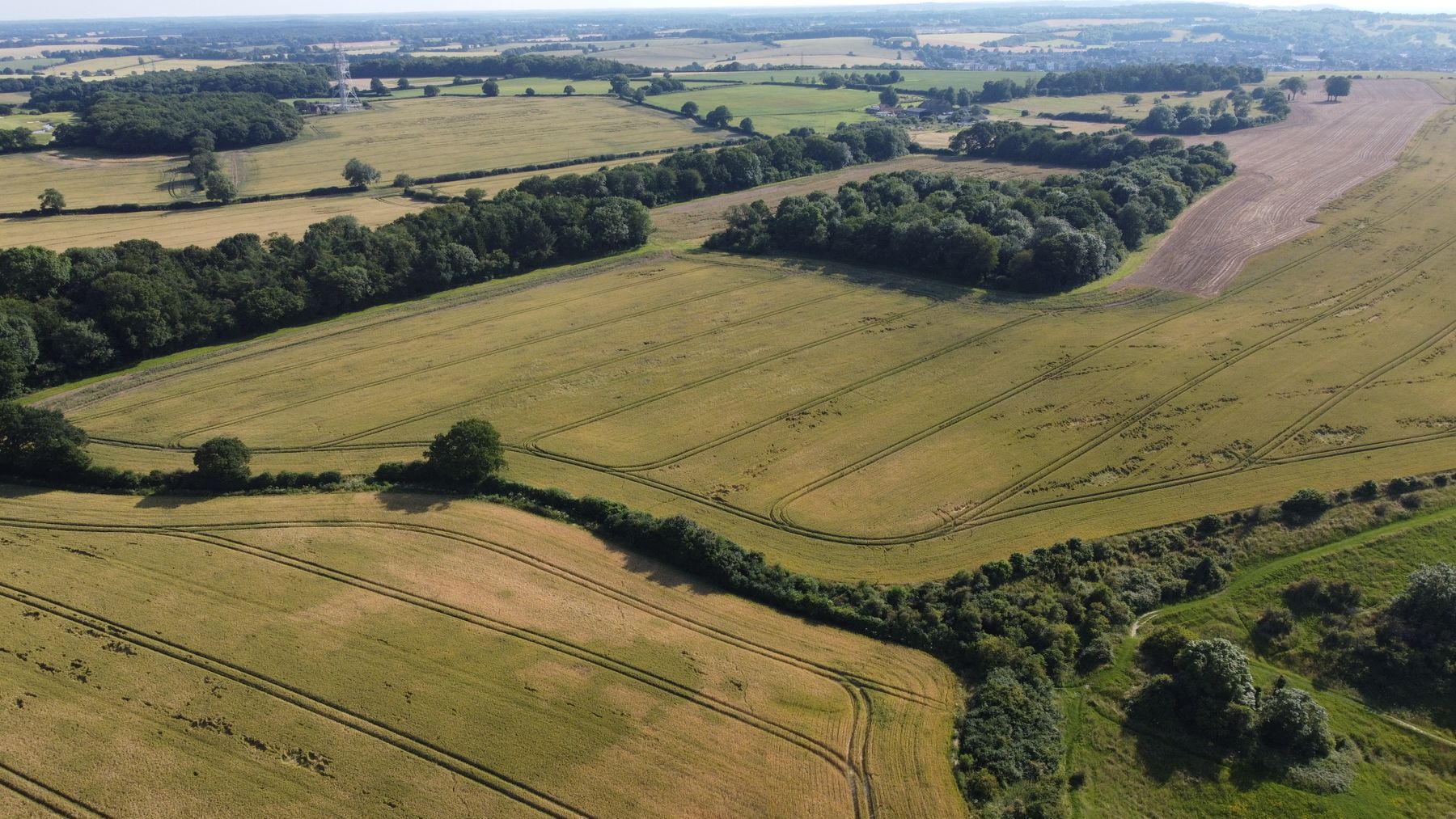
In one of the largest field surveys of its kind, 38 per cent of more than three thousand sites in south west England had soil structure degraded enough to generate enhanced run-off. Water that should have gone into the ground went across it instead, carrying soil and nutrients with it, and arriving downstream in hours rather than days.
A healthy soil takes rain in. A compacted one turns a field into a roof.
Field investigations carried out in south west England between 2002 and 2011 surveyed 3,243 sites. They found soil structural degradation to be widespread, with 38 per cent of sites sufficiently degraded to generate enhanced run-off. A related study found 75 per cent of sites carried soil structural damage giving rise to run-off, erosion and flooding.1
The Environment Agency’s own national picture is consistent with that:
Research comparing land uses finds permanent grassland soils generally have lower bulk density and higher hydraulic conductivity than arable soils, and generate less run-off and less soil loss.1 The difference is not the rain. It is the ground it lands on.
Soil is roughly half solid and half pore space, and the pore space is what does the work. Water enters through the larger pores, or macropores, which are created by roots pushing through, by earthworms burrowing, and by organic matter binding particles into crumbs with gaps between them.
Compaction crushes those pores. Where soil is significantly compacted there is a reduction in macropore formation and in root growth, and infiltration falls to the point where water simply cannot get in fast enough. What arrives at the surface stays at the surface.1
Three things then happen at once. The field loses the water it needed. The soil and its attached phosphate leave with it. And the flood peak downstream arrives faster and higher, because a catchment that cannot absorb rainfall delivers it all at once.
Flood defence spending is real and rising, with more than £10.5 billion committed between 2024 and 2036.3 But a wall at the bottom of a catchment is a response to water that has already been shed. It does nothing about why the ground upstream stopped holding it.
Infiltration is a function of structure, and structure is built by biology. Roots open channels. Earthworms create burrows that carry water deep into the profile. Organic matter binds particles into stable crumbs that resist slaking under rain.
The Environment Agency puts it plainly: soil organic matter acts like a sponge and can hold up to twenty times its own weight in water, making soil more resistant to drought and erosion.2
How much extra water that buys per hectare is genuinely contested. Work at Rothamsted Research suggests that for a silty clay loam, each 1 per cent increase in soil organic carbon equates to around 354,000 litres a hectare to 30 centimetres depth.4 A meta-analysis of the wider literature finds a far more modest average effect on available water capacity, strongly dependent on soil texture, with sandy soils responding most and clay soils barely at all.5
The honest position is that the direction is not in doubt and the magnitude is soil specific. Rebuilding organic matter improves structure, infiltration and drought resilience. Anyone quoting a single universal litres per hectare figure, in either direction, is overstating what the evidence supports.
The Soil First Initiative works on the soil itself, using natural soil biology to build structure and organic matter so farmland holds rain and nutrients instead of shedding them. It is done field by field and catchment by catchment, the land stays in full production throughout, and the change is measured in the soil and in the water. See how it works, or read the full evidence file.
Named by the Environment Agency itself. Fifty-five per cent of river water bodies fail the standard.
The Environment Agency’s own words, and a 2030 target with nothing measuring it.
A law in 1991. An advice service in 2006. Statutory farming rules in 2018. In 2026, fourteen per cent.